
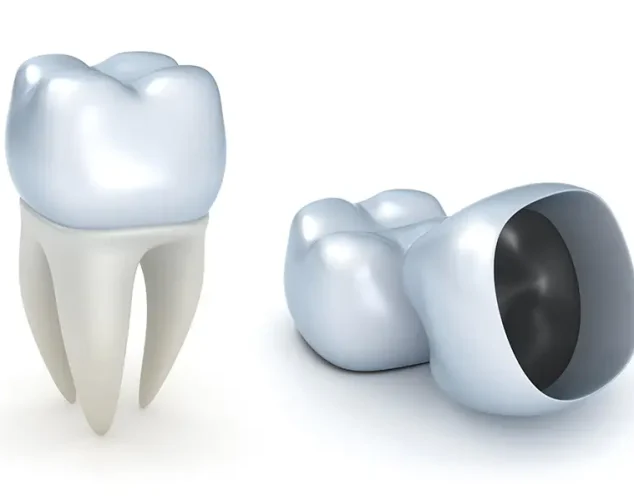
When Do You Need a Dental Crown? Signs You Shouldn’t Ignore
A damaged tooth does not always cause pain right away. Early structural changes may be subtle and easy to overlook. When these changes go unaddressed, the tooth can weaken over time and become more vulnerable to fracture. A dental crown is commonly used when a tooth no longer has enough natural strength to function safely on its own. Many patients searching for a dentist near me are surprised to learn that crowns are recommended not only for teeth that are visibly broken, but also for teeth that appear mostly intact. Recognizing early changes allows a dentist to evaluate the tooth before damage progresses further.
Signs You May Need a Dental Crown
Dental crowns are recommended when a tooth has lost enough structure that it cannot reliably withstand everyday biting and chewing forces. While only a dental exam can confirm whether a crown is needed, certain changes often prompt further evaluation.
These may include:
- Sensitivity to hot or cold that does not resolve
- Discomfort when biting or chewing
- Visible cracks, chips, or fractures
- A tooth that feels weak or unstable
- Large or aging fillings that no longer support the surrounding enamel
When these signs are present, a dentist assesses whether the remaining tooth structure can be preserved and stabilized.
Cracked or Broken Teeth: When a Filling Isn’t Enough
Small chips limited to the outer enamel can sometimes be managed with smoothing or bonding, depending on their size and location. Larger cracks affect the tooth’s ability to handle pressure and may continue to spread with normal use. When a crack extends deeper into the tooth, a filling may not provide sufficient reinforcement.
In these situations, cracked tooth repair often involves placing a crown to stabilize the remaining structure. The crown covers the tooth and helps prevent further separation along the crack. Without this support, routine chewing forces can increase the risk of a more serious fracture.
Do You Need a Crown or Just a Filling?
The decision between a filling and a crown is based on how much healthy tooth structure remains after the dentist evaluates the damage. Fillings are typically used when enough natural enamel is present to support the restoration. Crowns are recommended when the tooth requires reinforcement to function safely.
A crown may be considered when:
- Decay has compromised a significant amount of the tooth’s natural structure
- An existing filling has weakened the surrounding enamel
- Structural cracks are present within the tooth
Patients often search for dental crowns near me after learning that a filling alone may not adequately support the tooth under chewing pressure. A crown allows biting forces to be distributed more evenly across the tooth.
After a Root Canal: Why a Crown Is Often Recommended
Root canal treatment eliminates infection inside the tooth, but the removal of internal tissue can affect the tooth’s structural strength. As a result, the remaining structure becomes more susceptible to cracking during normal use.
Placing a crown helps restore strength by reinforcing the treated tooth from the outside. For this reason, tooth crown treatment is commonly recommended following root canal therapy, particularly for back teeth that absorb greater chewing forces.
What Happens During a Dental Crown Procedure?
Crown placement generally requires two visits. During the first appointment, the dentist evaluates the tooth and prepares its shape to allow secure crown placement. Impressions are taken to ensure proper shape and alignment, and a temporary crown is placed to protect the tooth.
At the second visit, the dentist evaluates the permanent crown, makes any necessary adjustments, and secures it in place. Once positioned, the crown restores function by supporting the tooth during chewing. Patients working with a dentist for dental crowns can expect each step to focus on stability, fit, and long-term tooth preservation.
What Happens If You Delay Getting a Crown?
Delaying crown placement allows existing structural damage to progress. Cracks may deepen, decay can extend further into the tooth, and the remaining enamel may no longer be able to support normal biting forces. Over time, this can increase the likelihood of fracture.
Ignoring the signs that you need a crown may result in:
- Increased sensitivity or discomfort
- Greater risk of sudden tooth fracture
- More extensive dental treatment is required if the tooth can no longer be preserved
Addressing structural concerns early helps reduce the risk of complications.
Schedule an Exam to See If You Need a Dental Crown
Crowns are used to restore stability and function when a tooth has been weakened by decay, fracture, or prior treatment. If a tooth feels different when chewing or shows visible changes, a dental exam allows a dentist to determine whether reinforcement is needed.
An evaluation at Poway Modern Dentistry provides patients with clear information about their tooth’s condition and the appropriate next steps. Early assessment supports informed decisions and long-term oral health.